

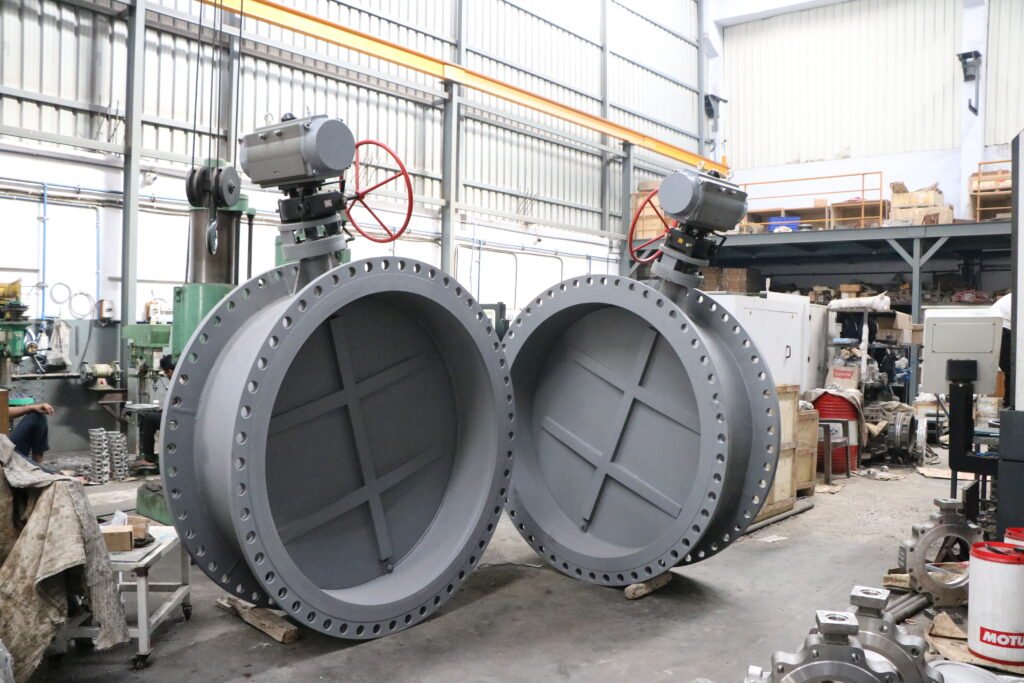
A single valve can influence your industrial facility’s entire performance. Selecting the wrong industrial valve doesn’t just cause minor inconveniences — it can result in costly repairs, safety hazards, and operational delays that negatively affect productivity. Understanding common pitfalls and valve functions is essential for ensuring smooth, safe, and efficient operations.
Industrial valves may be out of sight, but they are crucial components within large-scale processing plants and facilities. From oil and gas to chemical processing, each valve type has a specific purpose tailored to process control. Choosing the right valve ensures safety, cost efficiency, and long-term performance.
Understanding Your Options: Primary Types of Industrial Valves
Industrial operations rely on a diverse range of valve types. Each is designed for a specific function, making it important to understand how they differ before selecting what your facility needs.
Ball Valves
Ball valves feature a rotating ball with an internal bore that allows fluid to pass smoothly when open and seals tightly when closed. They provide quarter-turn operation and reliable flow control. They are commonly used for on/off applications, general fluid handling, oil and gas, and chemical processing. However, they are not recommended for slurry or abrasive materials.
Butterfly Valves
Butterfly valves use a rotating disc to regulate fluid flow. They are lightweight, compact, and cost-effective, and they support throttling operations. Variants such as concentric and eccentric butterfly valves offer improved control.
Check Valves
Check valves operate automatically based on pressure and direction of fluid flow. Their main function is to prevent backflow, which can cause hazards in processing plants. They are used in pump systems, boiler feeds, HVAC applications, and wastewater systems.
Gate Valves
Gate valves use a gate or wedge to block flow. When fully open, they offer unobstructed flow; when closed, they create a strong seal. These valves are ideal for slurries, shut-off points, water distribution, oil and gas facilities, and power plants.
Globe Valves
Globe valves provide precise throttling capabilities using a plug or disc mechanism. They are frequently used in cooling systems, chemical injection processes, and applications requiring regular flow adjustments.
What Happens When You Choose the Wrong Valve
Choosing the wrong valve can lead to serious operational and safety issues. Even small leaks can escalate into environmental hazards or full system failures. Using a valve not designed for specific flow control can result in mixing, pressure buildup, leaks, or equipment damage.
The Value of Quality: Why High-Quality Valves Matter
High-quality industrial valves ensure durability, reliability, and accuracy. Precision manufacturing helps produce valves that meet exact specifications. Custom valve design may consider fluid type, operational environment, flow rate, physical dimensions, and expected lifespan.
Enhancing Facility Operations Through Informed Valve Selection
Choosing the correct industrial valve is a strategic decision that affects safety, productivity, and long-term efficiency. Each valve type serves a specific purpose, and selecting the wrong one can create operational risks. Working with experienced professionals ensures you select durable, accurate valves that support safe and efficient operations.